Immigration in Switzerland: the basics you need to know
Residence permits, quotas, and special conditions
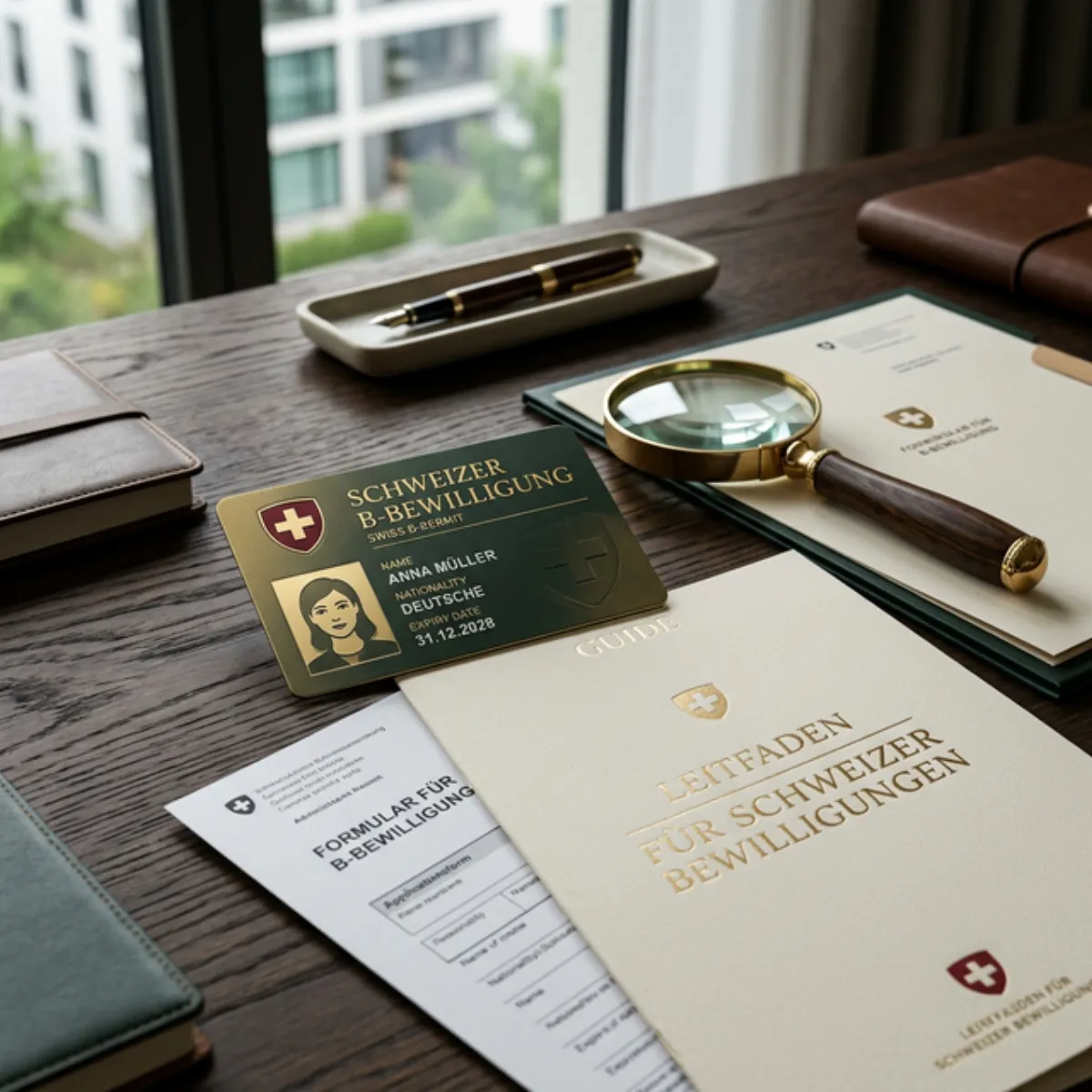
Obtaining a residence permit is the first step to settling in Switzerland. Various types of permits exist depending on your personal and professional situation. Understanding the nuances between EU/EFTA and non-EU regulations is essential for a smooth transition.
Main Residence Permits
| Permit | EU/EFTA Nationals | Non-EU/EFTA Nationals |
|---|---|---|
| L permit (Short-term) |
Valid up to 12 months. Family reunification possible (4-12m). Issued on proof of job-seeking. | Valid up to 12 months. Family reunification possible (4-12m). Highly regulated. |
| B permit (Residence) |
Valid for 5 years, renewable. Family reunification possible. Non-gainful: proof of funds. | Valid for 12 months, renewable. Family reunification possible. Entry visa required. |
| C permit (Settlement) |
Granted after 5/10 years. Unlimited stay. Permanent residence. | Granted after 10 years (typically). Unlimited stay. Language integration required. |
| G permit (Frontier) |
Valid 5 years. Return to country of residence at least once a week. | Valid 5 years. 6m residence in border area required. Weekly return. |
Other permits include Permit F (temporarily admitted), Permit N (asylum seekers), and Permit S (temporary protection).
Quotas for 2024
Each year, quotas are allocated by canton according to local economic needs. Large centers like Zurich or Berne have higher allocations. For 2024, the available quotas include:
- EU/EFTA: 500 B permits / 3,000 L permits
- Non-EU/EFTA: 4,500 B permits / 4,000 L permits
- UK Nationals: 2,100 B permits / 1,400 L permits
- Croatian: 1,204 B permits / 1,053 L permits
Is rejection common? Employers generally do not need to worry about quotas as a limiting factor. Cases where applications are rejected solely due to lack of quotas are extremely rare.
Language Requirements
| Scenario | Required Level | Who is concerned? |
|---|---|---|
| Family reunification (B) | 💬 A1 | Spouses of B or C permit holders |
| Family reunification (C) | 💬 A2 / ✍️ A1 | Spouses of C holders or Swiss citizens |
| Settlement Permit (C) | 💬 A2 / ✍️ A1 | Standard application after 10 years |
| Fast-track (C) | 💬 B1 / ✍️ A1 | Application after 5 years stay |
| Naturalisation | 💬 B1 / ✍️ A2 | Standard or simplified naturalisation |
Special Conditions
Employment Specificity: Legitimation cards from the FDFA serve as residence permits for employees of permanent missions and international organizations (UN, NGOs, etc.).
EU/EFTA Advantage: Benefit from free movement. Can enter and seek work for 3 months without declaration. Can work up to 90 days/year via online registration.
Non-EU Challenges: Stricter recruitment rules (proof of prioritized Swiss/EU search) and entry visa requirements apply. Procedures are significantly more complex.
Professional Guidance
Managing international recruitment and immigration procedures can quickly become complex. If you need advice, feel free to contact Barbara Vuillet, our immigration expert, for discrete and professional support.
Sources
Discuss Your Relocation.
Our partners are available to discuss your specific situation with absolute confidentiality.